
Prof. Dr. Thorsten Jungmann (last updated 2025-11-09)
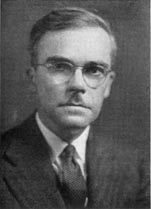
Edward Lawry Norton (1898–1983) was an American electronics engineer after whom Norton’s theorem is named.
Norton was born in Rockland, Maine, and studied electrical engineering at the Massachusetts Institute of Technology (MIT) and at Columbia University. From 1922 he worked at Western Electric, later at Bell Laboratories, and was a pioneer in the field of network theory.
In 1926, Norton described in an internal report the conversion of complex electrical networks into the so-called Norton equivalent, which consists of a current source in parallel with a resistor. This theorem makes it possible to represent extensive networks by a simpler equivalent circuit, which considerably simplifies the analysis and design of electric circuits. At the same time, this concept was discovered independently by the German scientist Hans Ferdinand Mayer, which is why it is also known as the Mayer–Norton theorem.
His life’s work is still of central importance today for engineers and scientists who want to simplify and understand complex electrical networks. Norton’s theorem complements the related Thévenin’s theorem and is an essential part of modern electrical engineering and circuit theory.
Reference and further reading:
https://en.wikipedia.org/wiki/Edward_Lawry_Norton
Image source: Wikipedia