
Prof. Dr. Thorsten Jungmann (last updated 2026-10-04)
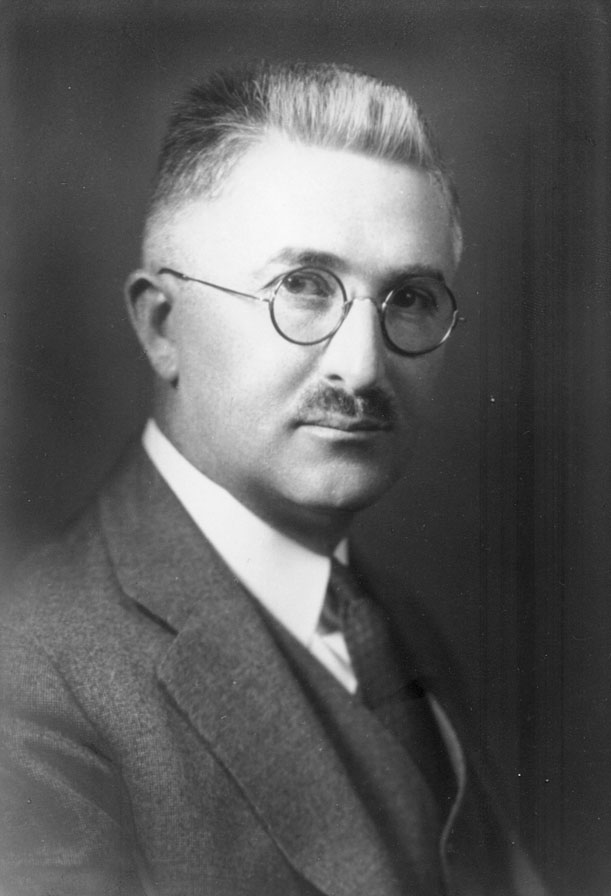
Ralph Vinton Lyon Hartley (1888–1970) was an American electronics researcher. He was born in Sprucemont, Nevada, studied at the University of Utah (A.B. 1909) and, as a Rhodes Scholar, at Oxford University (B.A. 1912, B.Sc. 1913). He then worked at the Research Laboratory of the Western Electric Company, whose research division later became the Bell Laboratories, and retired from Bell Labs in 1950. In 1915 he was in charge of radio receiver development for the Bell System transatlantic radiotelephone tests; for these he developed the Hartley oscillator (patent filed on 1 June 1915 and awarded on 26 October 1920). In 1946 he received the IRE Medal of Honor for his oscillator and his information proportionality law.
That law comes from his paper ‘Transmission of Information’ of 1928, in which he formulated that the total amount of information that can be transmitted is proportional to the frequency range transmitted and the time of the transmission. George R. Price called Hartley’s definition of information ‘probably the single most important prerequisite’ for Shannon’s paper of 1948.
The unit hartley (symbol Hart) is named after him. It is a logarithmic unit of information based on base 10 logarithms: one hartley is the information content of one decimal digit, assuming that each possible value is equally probable. In 1928 Hartley defined the amount of information as the logarithm of the number of possible symbol sequences and left the base of the logarithm open. One hartley corresponds to approximately 3.322 bit. If base 2 logarithms are used instead, the unit of information is the shannon (Sh), which is often simply called a bit.
Reference and further reading:
https://en.wikipedia.org/wiki/Ralph_Hartley
https://en.wikipedia.org/wiki/Hartley_(unit)
Image source: Wikimedia Commons (CC BY-SA 3.0, photographer not stated, uploaded by Hartley’s grand-nephew)
