
Prof. Dr. Thorsten Jungmann (last updated 2026-03-02)
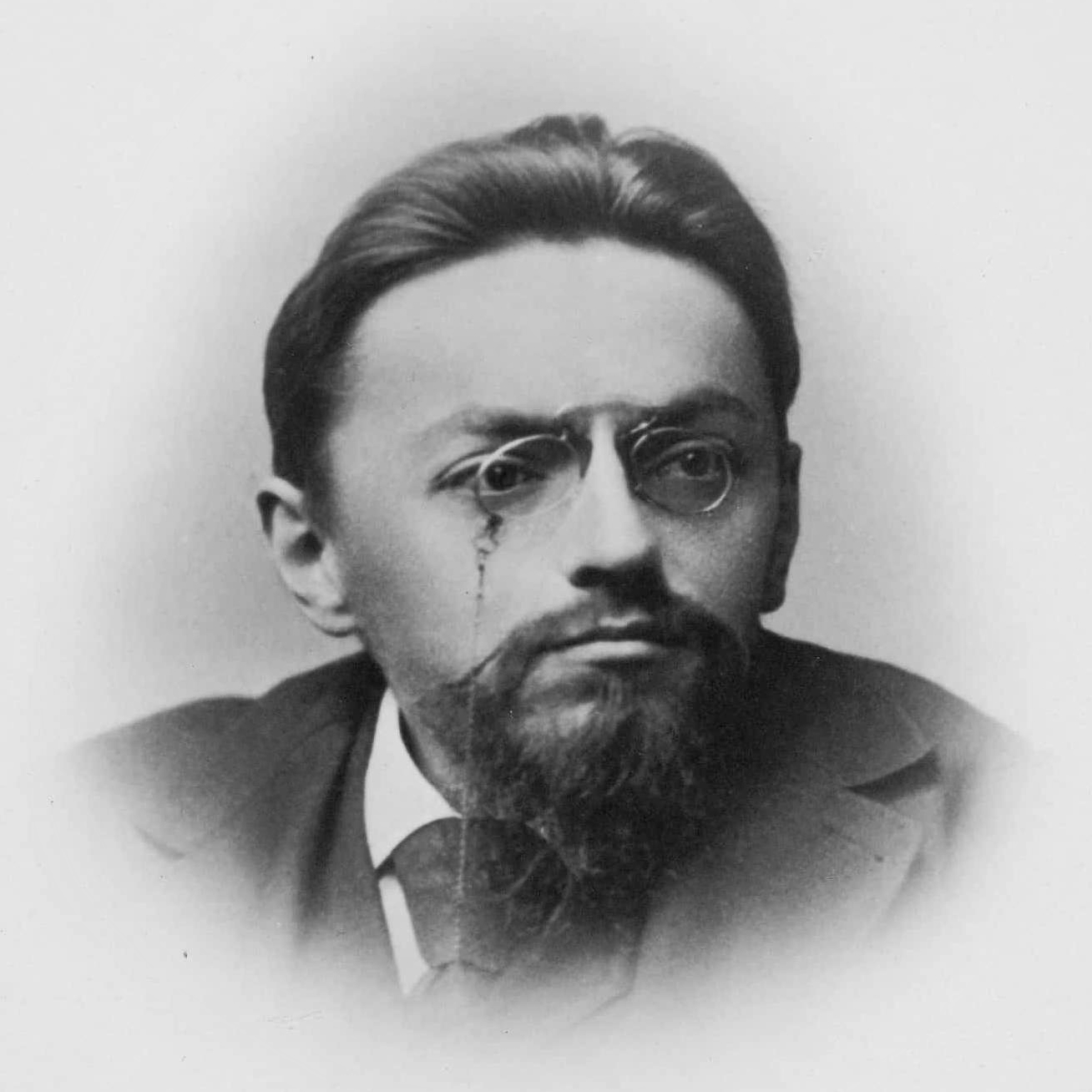
Charles Proteus Steinmetz (1865–1923), born Karl August Rudolf Steinmetz in Breslau, was a German-American electrical engineer and mathematician who decisively advanced the practical application of AC circuit analysis. Because of his political convictions he left Germany and emigrated in 1889 to the USA, where he made an outstanding career at the General Electric Company (GE) in Schenectady, New York.
Steinmetz’s greatest contribution to electrical engineering is the introduction of complex calculation into AC circuit analysis. He recognized that the trigonometric calculations of AC circuits, which had been cumbersome until then, can be simplified dramatically if you represent sinusoidal voltages and currents as complex phasors. His paper ‘Complex Quantities and Their Use in Electrical Engineering’, published in 1893, and his book ‘Theory and Calculation of Alternating Current Phenomena’ (1897) made impedance calculation the standard tool of electrical engineering – a tool that engineers all over the world still use today.
Another important contribution is the Steinmetz equation (German: Steinmetz-Gleichung) for calculating the hysteresis losses in ferromagnetic materials:
Here is a material-dependent constant, the frequency, the maximum magnetic flux density and the Steinmetz exponent (typically to ). To this day, this equation is the basis for calculating iron losses in transformers and electric motors.
Steinmetz was, in addition, an expert in lightning protection and high-voltage engineering. In his laboratory at GE he generated artificial lightning in order to investigate the effects of overvoltages on electrical installations. He held more than 200 patents and was a professor at Union College – despite a severe physical disability that had been with him since birth.
Reference and further reading:
https://en.wikipedia.org/wiki/Charles_Proteus_Steinmetz
Image source: Wikipedia
