
Prof. Dr. Thorsten Jungmann (last updated 2026-10-03)
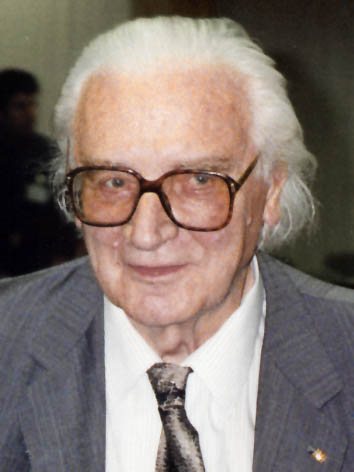
Konrad Zuse (1910–1995) was a German civil engineer, pioneering computer scientist, inventor and businessman. He was born in Berlin and graduated in civil engineering from the Technische Hochschule Berlin in 1935. As a design engineer at the Henschel aircraft factory he had to perform many routine calculations by hand, which led him to plan a way of doing them by machine. In 1936 he began to build his first computer in his parents’ flat in Berlin.
His first machine, the Z1 (built 1936–1938), was a mechanical binary floating-point calculator that read its instructions from perforated 35 mm film; it never worked well because of insufficient mechanical precision. The Z2 was a revised version of the Z1 using telephone relays. On 12 May 1941 Zuse presented the Z3, a binary 22-bit floating-point calculator with a memory and a calculation unit based on telephone relays; it was programmable with loops but had no conditional jumps. The Z3 is regarded as the world’s first working programmable, fully automatic digital computer, and in 1998 it was shown to be Turing complete in principle. In 1937 Helmut Schreyer had advised Zuse to use vacuum tubes as switching elements, which Zuse at the time considered a ‘crazy idea’.
In 1936 Zuse filed patent applications that anticipated a von Neumann architecture. In 1941 he founded one of the earliest computer businesses, which built the Z4; it is arguably the world’s first commercial computer and was rented to ETH Zurich in 1950. From 1943 to 1945 he designed Plankalkül, the first high-level programming language. In 1965 he received the Harry H. Goode Memorial Award together with Stibitz.
Reference and further reading:
https://en.wikipedia.org/wiki/Konrad_Zuse
https://en.wikipedia.org/wiki/Z3_(computer)
Image source: Wikimedia Commons (CC BY-SA 3.0, Wolfgang Hunscher)
