
Prof. Dr. Thorsten Jungmann (last updated 2025-09-04)
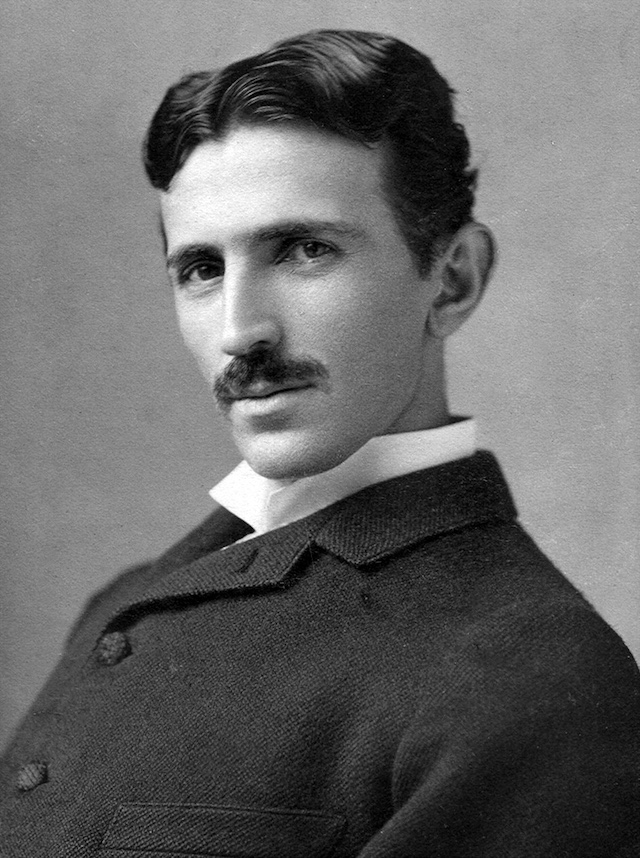
Nikola Tesla (1856–1943) was a visionary inventor and physicist whose groundbreaking developments fundamentally shaped modern electrical engineering. His most important achievement is the development of the alternating current system (AC), which made the transmission of electrical energy over long distances efficient and economical – a system that today forms the basis of power grids worldwide.
Tesla’s other significant inventions include the three-phase motor (induction motor) and the polyphase AC system, which he successfully put into practice in collaboration with George Westinghouse. With the Tesla coil, a high-frequency transformer, Tesla demonstrated spectacular experiments on the wireless transmission of electricity and laid the foundation for radio communication and modern high-voltage engineering. Tesla also made central contributions to the development of radio technology, remote control and radio broadcasting.
Throughout his life, Tesla pursued the vision of making energy available to all people without cables and free of charge. He experimented with high-frequency current, wireless transmission of signals and electricity, and filed more than 300 patents in various countries.
To this day, Tesla inspires technology, science and pop culture through his innovation-driven approach and the foresight with which he anticipated concepts such as the modern power grid, wireless communication and the use of renewable energies. The unit of magnetic flux density, the ‘tesla’, honours his contribution to the physics of electrical engineering.
Reference and further reading:
https://en.wikipedia.org/wiki/Nikola_Tesla
Image source: Wikipedia