Prof. Dr. Thorsten Jungmann (last updated 2025-09-01)
1 What does it look like?
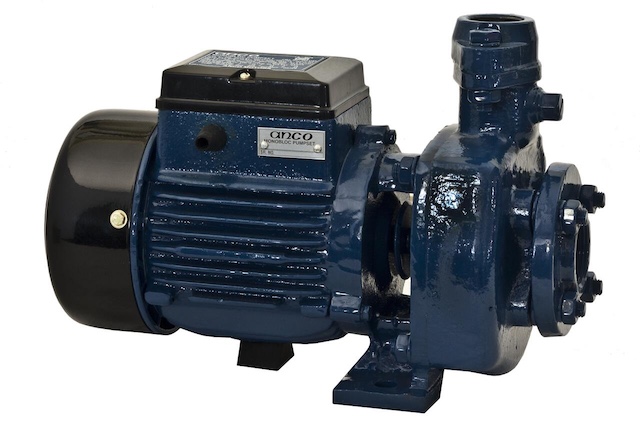
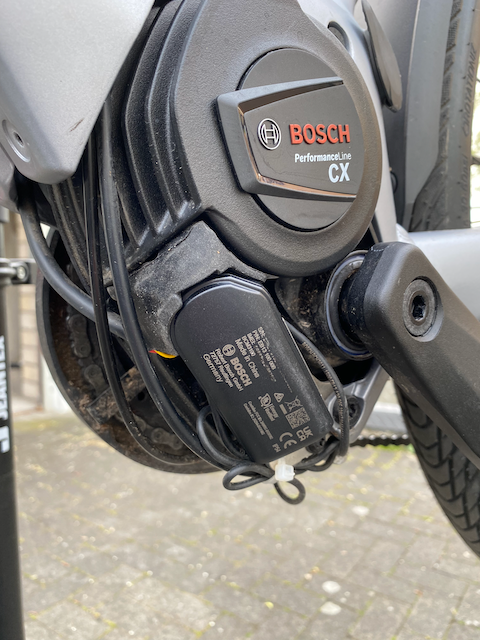
An electric motor (German: Elektromotor, also Motor) consists of a housing with terminals or electric lines for the power supply, a shaft or axle for delivering the mechanical power, and ventilation openings or heat sinks. Small electric motors are often cylindrical, compact and built into devices; large electric motors can weigh several tonnes and be permanently mounted.
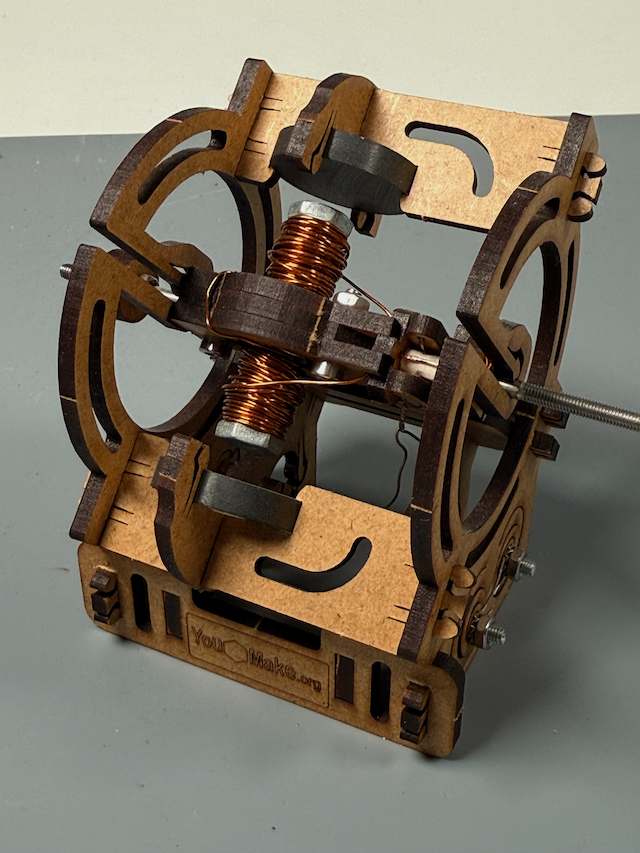
| Industrial electric motor | E-bike electric motor | Electric motor model |
|---|---|---|
 |  |  |
2 What can it do?
The electric motor converts electrical energy into mechanical energy. It drives machines, vehicles, tools or devices. In the process, electrical power is converted into torque and rotational frequency.
3 How does it work?
Electric motors use the principle of electromagnetism: a current-carrying conductor in a magnetic field experiences a force.
- DC motors (direct current motors) have a commutator for reversing the polarity of the current.
- AC motors (alternating current motors) work with rotating magnetic fields, e.g. asynchronous motors or synchronous motors.
- Special electric motors such as stepper motors or servomotors convert electrical signals into motion with particular precision.
4 What does it look like inside?
Inside you will find:
- the stator (German: Stator) (stationary part, usually with windings that generate a magnetic field or with permanent magnets),
- the rotor (German: Rotor) (rotating part with windings, squirrel-cage rotor or magnets),
- the bearings of the shaft,
- where applicable, brushes and commutator (in classic DC motors),
- cooling devices such as fans or cooling fins.
5 What role does it play in teaching?
Electric motors clearly illustrate the conversion of electrical energy into mechanical work, so they are actuators. They are a central example of the application of the Lorentz force, of torque generation and of the relationship between electrical power, mechanical power and efficiency. In teaching, electric motors are used as models and in laboratory experiments to record characteristic curves and to demonstrate open-loop and closed-loop control concepts. In alternating current theory, electric motors are common examples of inductive loads.
6 What role does it play in practice?
Electric motors are indispensable in many all technical systems. They drive machines in industry, pump liquids, move lifts, propel vehicles or rotate hard disks. Around two thirds of the world’s industrial electricity consumption is accounted for by electric motors, which underlines their immense practical importance.
Symbols
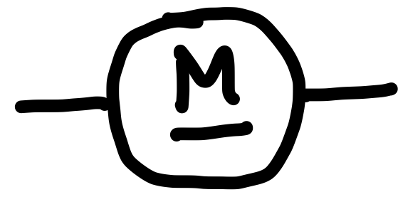
- Letter code in schematics: M