
Prof. Dr. Thorsten Jungmann (last updated 2025-09-01)
An actuator (German: Aktor) converts electrical quantities such as voltage, current or power into non-electrical quantities, e.g. motion, light, heat or pressure.
1 What does it look like?
The outer shape depends strongly on the type and the application:
- Electric motors: cylindrical or cuboid housing with a shaft or axle.
- LEDs: small semiconductor chips in plastic or glass housings, also in displays.
- Valves: housing with an electrical connection box and a flow channel for the medium.
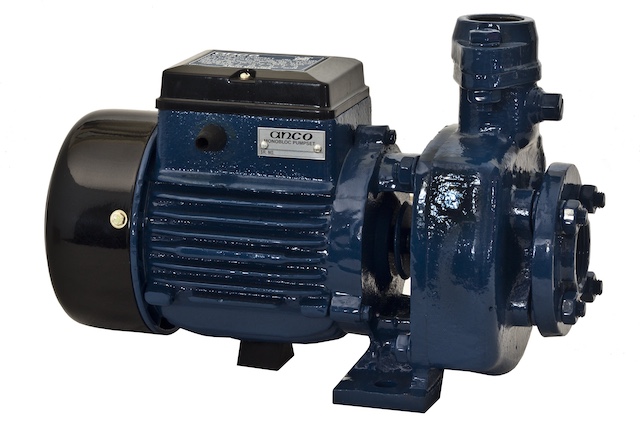
AC motor with pump
Photo: PxHere
Licence CC0
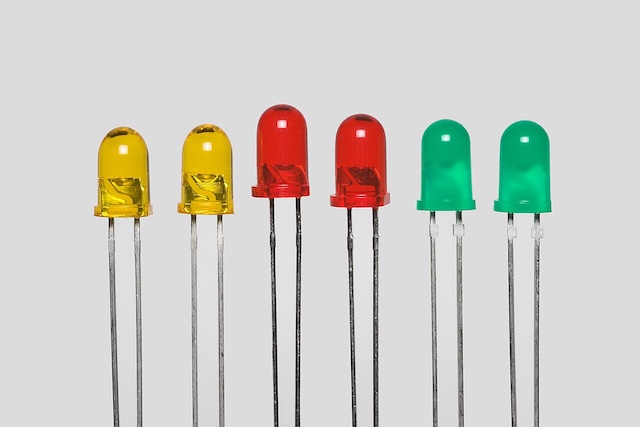
Light emitting diodes (LEDs)
Photo: Afrank99
Licence: CC BY-SA 2.0
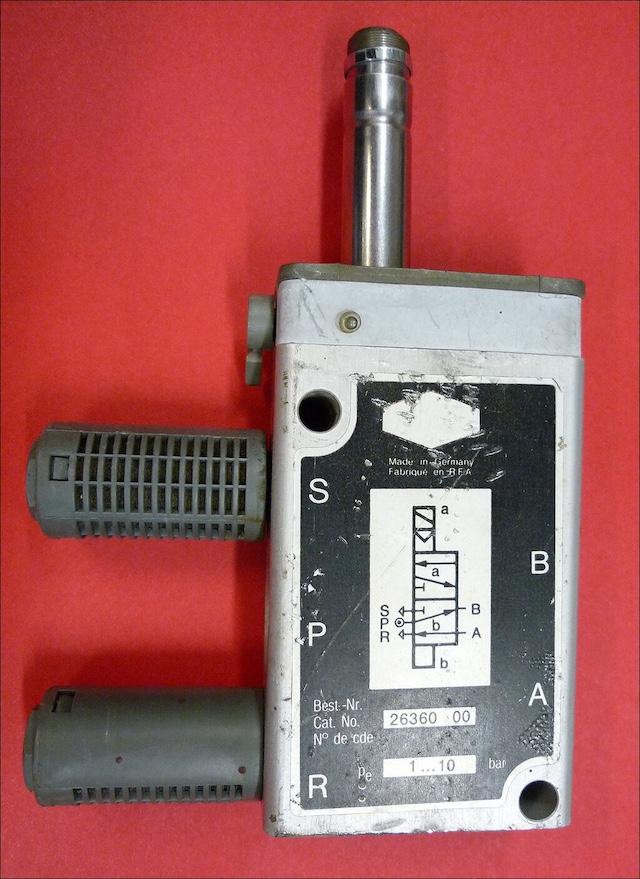
Solenoid valve
Photo: ADwarf
Licence: CC BY-SA 3.0
2 What can it do?
An actuator converts electrical energy into another form of energy or into a physical effect.
- Electric motor: power → mechanical rotary motion.
- LED: voltage → visible light.
- Electrically adjustable valve: voltage → controlled volume flow rate of air, water or hydraulic oil.
3 How does it work?
Depending on the type, actuators use different physical operating principles:
- Electromagnetism (electric motor, relay, solenoid valve)
- Electrothermal effects (heating elements, bimetallic switches)
- Photoelectric effect (LED, laser diode – conversion of electrical energy into photon emission)
- Piezoelectric effect (precision drive, ultrasonic sensor/actuator)
4 What does it look like inside?
The inner workings depend on the operating principle:
- Electric motors contain coils, magnets, shaft bearings and often brushes or electronic control.
- LEDs contain a semiconductor chip, bond wires and a lens.
- Valves contain a movable closure member (e.g. a piston or a diaphragm) that is actuated by an electromagnet or an electric motor.
5 What role does it play in teaching?
In teaching, actuators serve as central examples of energy conversion in electrical engineering. They illustrate the relationship between electrical quantities and physical work, power and efficiency. In laboratory experiments, they are used to carry out measurements of efficiency, open-loop control and closed-loop control.
6 What role does it play in practice?
Actuators are indispensable interfaces between the open-loop/closed-loop control and the real system. You find them in industrial plants, automotive engineering, home automation, medical engineering and consumer electronics – wherever electrical signals or energy have to be converted into usable physical effects.
Symbols
Letter codes in schematics
- Electric motor M
- Light emitting diode D
- Small lamp E
- Valve
- M (for providing mechanical energy) or
- Q (varying the flow of energy)
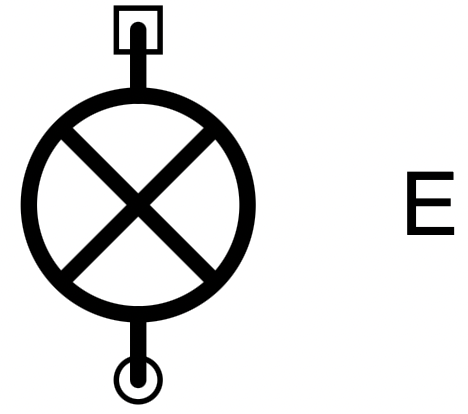
Indicator lamp
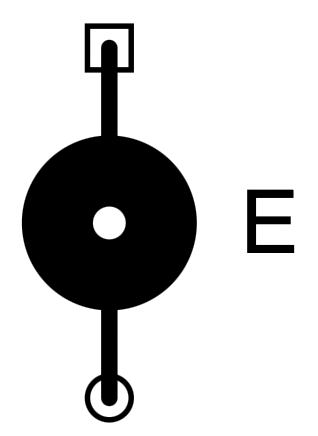
Buzzer
Calculations
- No specific formulas at this point.