
Prof. Dr. Thorsten Jungmann (last updated 2025-11-09)
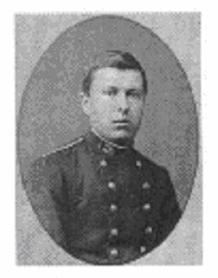
Léon Charles Thévenin (1857–1926) was a French telegraph engineer who became known above all for Thévenin’s theorem, which is named after him.
Thévenin was born in Meaux, France, and studied at the renowned École Polytechnique and at the École Supérieure de Télégraphie. After graduating, he worked for the French postal and telegraph administration, where he dealt intensively with the analysis of electric circuits.
In 1883, Thévenin developed a method for simplifying complex electrical networks, known as Thévenin’s theorem. This theorem is based on Kirchhoff’s laws and Ohm’s law and makes it possible to represent any linear circuit by a simple equivalent circuit with a single voltage source and a series resistor. This greatly simplified the calculation of currents and voltages in complex networks.
Thévenin’s work remains a fundamental part of electrical engineering and network theory to this day, because his theorem helps developers and students to analyse and understand electric circuits efficiently. He died in Paris in 1926 and was buried in Meaux, the town of his birth.
Reference and further reading:
https://en.wikipedia.org/wiki/Léon_Charles_Thévenin
Image source: Wikipedia