
Prof. Dr. Thorsten Jungmann (last updated 2025-09-02)
1 What does it look like?
Terminals (German: Klemmen) come in different designs, which also differ greatly in appearance:
- Screw terminal: elongated or cuboid plastic housing in which metallic contact parts are embedded. Visible from the outside are screws with which the conductors are fastened.
- Spring terminal (‘WAGO’ terminal): compact plastic body, usually grey or transparent, with levers or coloured markings. The openings for the electric lines are clearly recognizable.
- Crocodile clip: small, spring-loaded pair of metal levers with serrated jaws, embedded in a plastic or rubber sleeve. At the rear end there is a connection for the electric line.
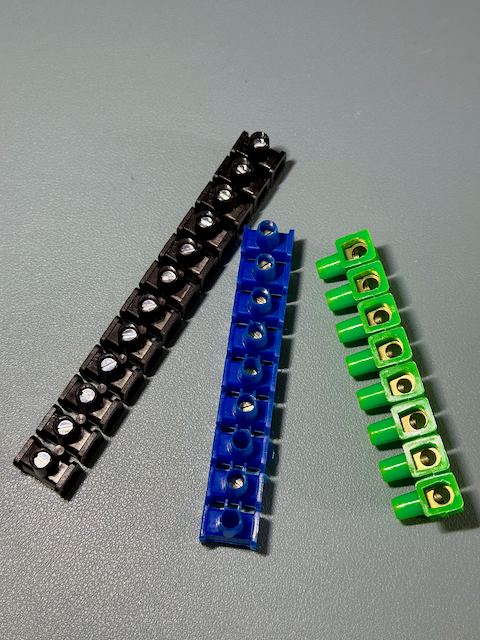
Screw terminals
Here: ‘junction box terminals’ for connecting installation cables in an installation box, often flush-mounted boxes.
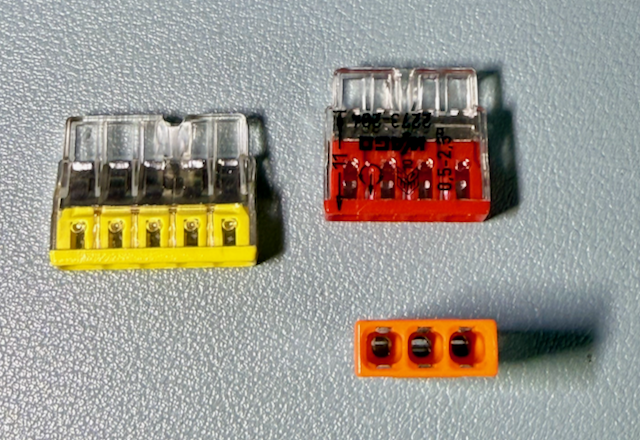
Spring terminals
here: WAGO terminals with 3 to 5 connections, cross-section
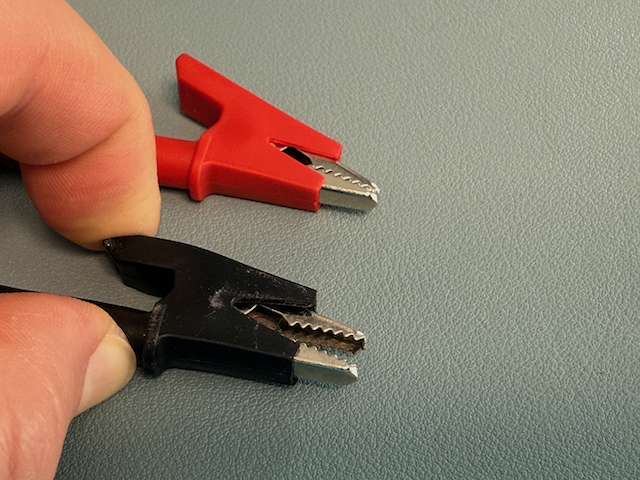
Crocodile clips
here: with banana jack for connecting test leads
2 What can it do?
A terminal establishes an electrically conductive and mechanically secure, but detachable connection between an electric line and a connection or contact point. Depending on the design, the connection can be permanent (e.g. screw or spring terminal) or provisional and flexible (crocodile clip).
3 How does it work?
- Screw terminal: The conductor is inserted and pressed onto the metal contact with a screw.
- Spring terminal: The conductor is pressed onto a busbar by spring force; on many models, lever mechanisms make opening and closing easier.
- Crocodile clip: Squeezing the levers together opens the jaws; when you let go, the spring closes the jaws and presses them onto the contact point.
4 What does it look like inside?
Inside, all terminals have a conductive contact part made of metal:
- Screw terminal: screw + metal block as a pressure contact.
- Spring terminal: spring mechanism + busbar
- Crocodile clip: two lever arms + spring, which presses the serrated jaws together.
5 What role does it play in teaching?
Terminals are standard components in experiments and set-ups. They illustrate the importance of secure contact, mechanical fixing and the influence of contact resistance.
6 What role does it play in practice?
- Screw and spring terminals are the usual connection techniques in electrical installations.
- Crocodile clips are widely used in measurement and test set-ups.
- In all cases, terminals provide secure, detachable and practical electrical connections.
Symbols
- Letter code in schematics: X
- Terminals are symbolized by a hollow circle.
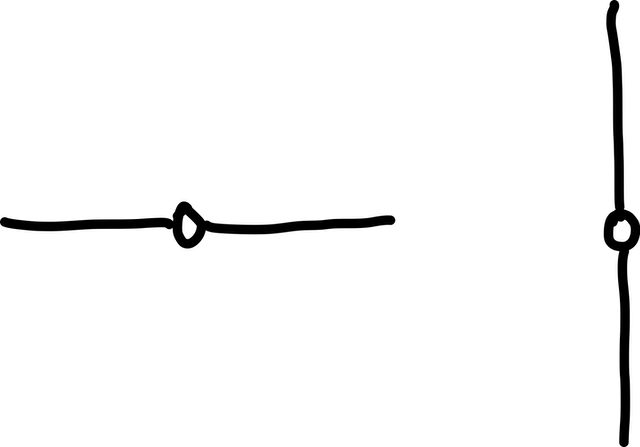
Calculations
No calculations are carried out for terminals in the fundamentals of electrical engineering.