
Prof. Dr. Thorsten Jungmann (last updated 2025-09-02)
1 What does it look like?
A connector (German: Steckkontakt) consists of a plug (pin) and a jack (socket).
Plug
A cylindrical metal pin with a slotted or spring-loaded surface (lamellae) that ensures reliable contact. The pin is usually embedded in a plastic housing that serves as a grip and is often colour-coded (e.g. red or black for plus/minus). At the rear end there is a clamped, screwed or soldered connection for the electric line, and often also a jack for branching off a further electric line.
In Europe a diameter of 4 mm is standard, but other sizes also exist, such as 2 mm for finer laboratory applications or 6 mm for higher currents. Some designs are also made without springs or have lateral locking mechanisms. Ideally, the cross-section of the connected electric line matches the plug and the current.
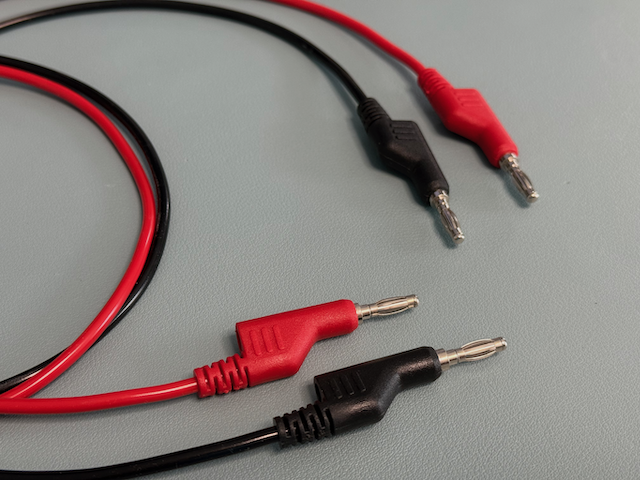
Banana plug
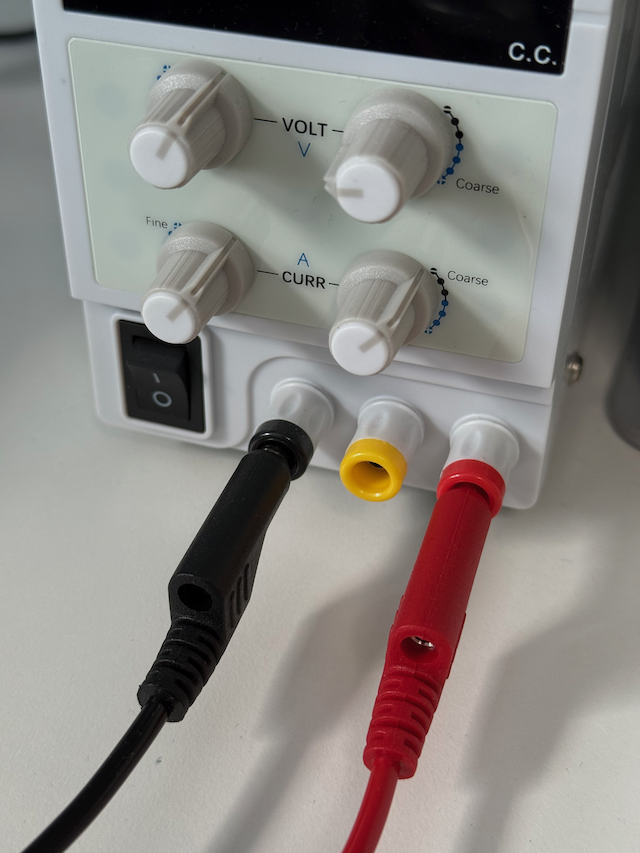
Banana jack with banana plug
here: in the front panel of a power supply
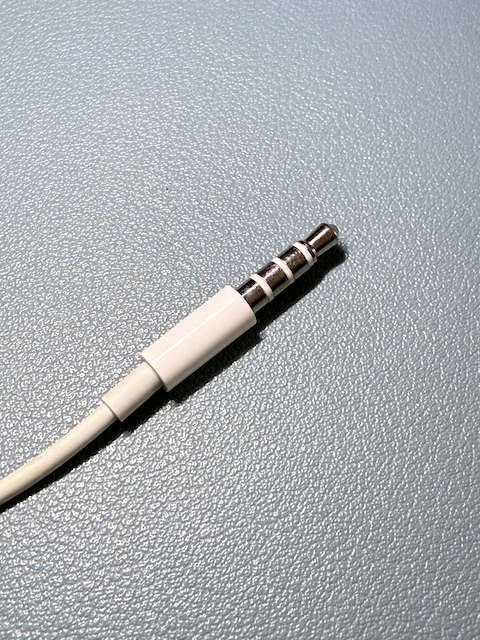
TRRS plug
here: audio plug (Apple EarPod) with four contacts for connecting the headset with microphone, buttons for volume control and call answering
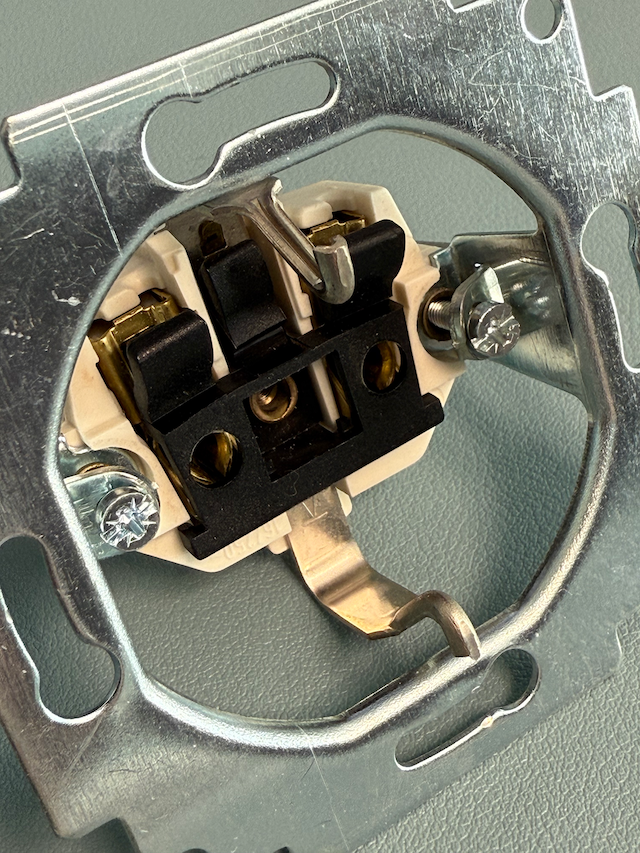
Socket-outlet without housing
strictly speaking: protective-contact socket, counterpart to the protective-contact plug
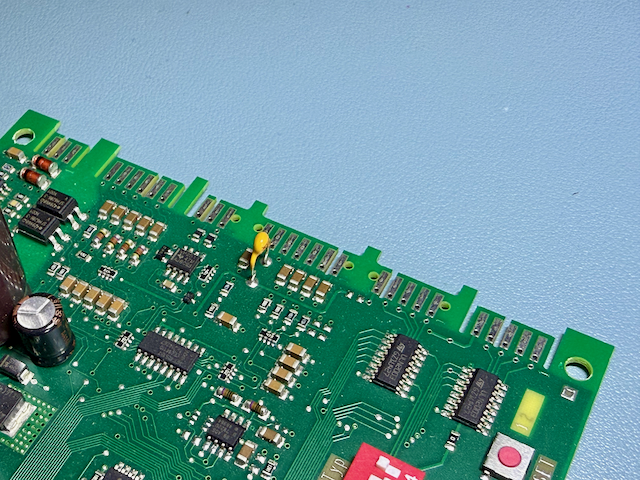
Connectors of a circuit board
The control board is connected to the system to be controlled (here: a heat pump) via matching jacks (terminals).
Counterpart: jack
The matching counterpart to the plug is the jack (socket). The banana jack has a cylindrical bore with a conductive contact inside. It is usually integrated into front panels of devices, laboratory patch panels or test leads and holds the plug with a positive fit. Jacks are often colour-coded and available in various sizes with different numbers of contacts. Another example of a jack is the common household socket-outlet (protective-contact socket-outlet).
2 What can it do?
The plug is used to make detachable, electrically conductive connections between components. The counterpart to the plugged connection is the permanent connection, which is made by soldering, for example. The plug allows quick connection and disconnection without tools, and is mechanically stable and electrically safe.
The banana plug (German: Bananenstecker) is one type of plug. Its technical term is spring plug or lamella plug (German: Federstecker or Lamellenstecker). Banana plugs are also often called laboratory plugs, because they are frequently used in laboratory environments. A banana plug is a single-wire electrical connector that is typically used to connect electric lines to power supplies or measuring instruments.
Other types of plug-in connections are multi-wire, such as the TRRS plug/jack or multi-pole circuit-board connectors.
3 How does it work?
The plug is inserted into a matching jack. In the banana plug, the lamellae or springs on the metal pin press against the inner wall of the jack and thus create an electrical contact over a large area. In other plug-in connections, such as the protective-contact plug, the springs in the jack clamp the metal pin of the plug and thus provide a firm hold and a low contact resistance.
4 What does it look like inside?
Inside the plug is the connection between the connected electric line and the contact pins, which is made either by soldering, by crimping or by a screwed or clamped connection. A plastic housing often insulates the plug, serves as a grip and, where applicable, also acts as strain relief.
5 What role does it play in teaching?
Plugs, in particular banana plugs, are standard in laboratories because they allow test leads, experimental set-ups and test equipment to be connected quickly and safely. They are robust, easy to handle and reusable in numerous experiments. Different colours make it easier to keep track of the electric circuits you have plugged together.
6 What role does it play in practice?
Protective-contact plugs connect household appliances and tools to the power grid with two wires (L and N) or three wires (L, N and PE (protective conductor)).
In industrial environments, multi-pole CEE connectors are often used to supply machines and installations with energy. Inside devices, all types of single-pole and multi-pole plug-in connections are used.
Banana plugs are used in measurement technology, in laboratory set-ups, in test equipment and for loudspeaker connections. They are widespread in workshops, schools, universities and industrial test stations.
Symbols
- Letter code in schematics: X
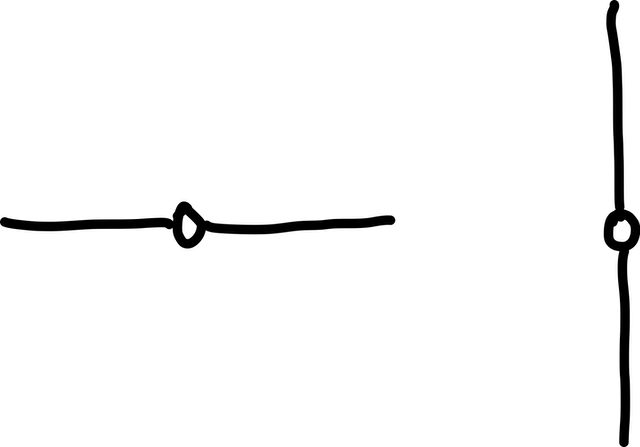
- In schematics, a plug-in connection is represented as a detachable connection by a small hollow circle.
Calculations
No calculations are carried out for plug-in connections in the fundamentals of electrical engineering.