
Prof. Dr. Thorsten Jungmann (last updated 2026-10-03)
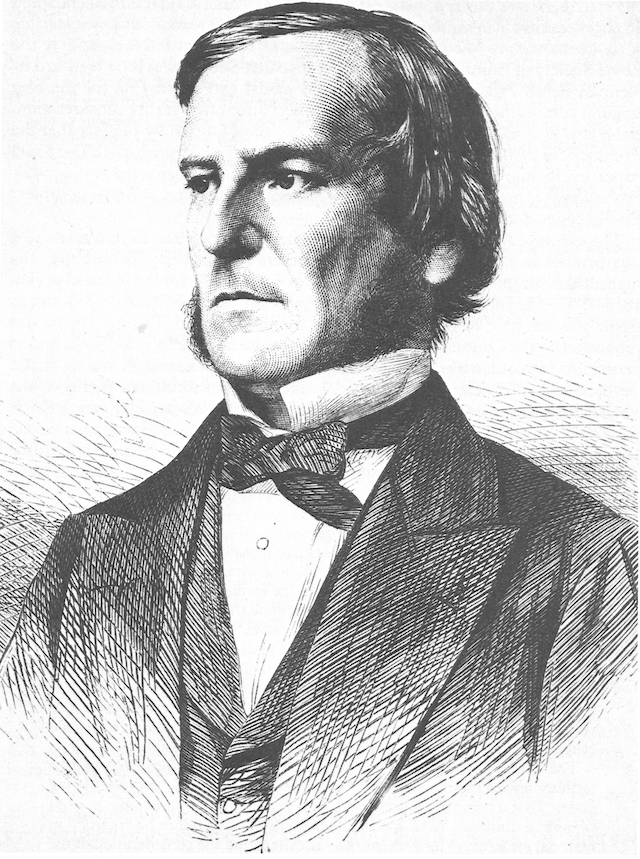
George Boole (1815–1864) was an English mathematician, logician and philosopher who is regarded as the founder of Boolean algebra. Without any formal academic education, Boole developed a mathematical theory of logic that today forms the foundation of digital electronics and computer science. He revolutionized mathematics and logic by developing a formal system that became the basis of the digital world and of electrical engineering – from simple logic circuits to modern computer technology. The core of his work is the insight that logical statements can be treated as mathematical operations with only two values (true/false or 1/0).
Boolean algebra consists of the basic operations AND, OR and NOT. With these, the behaviour of digital electric circuits and computers can be determined and analysed unambiguously. Input states (e.g. switch positions) lead via logic operations to output states – this forms the basis for all modern computers, microcontrollers and their programming languages. Search engines, databases and all digital communication are also based on Boole’s concepts.
Reference and further reading:
https://en.wikipedia.org/wiki/George_Boole
Image source: Wikipedia