Prof. Dr. Thorsten Jungmann (last updated 2025-11-16)
1 What does it look like?
Capacitors (German: Kondensatoren) come in various designs. Typical are cylindrical cans, cuboid or teardrop-shaped housings, and large high-voltage capacitors in metal housings.
On the outside they usually carry printed markings giving the capacitance, rated voltage and type. The connecting wires or pins are brought out either axially (at both ends) or radially (on the underside).
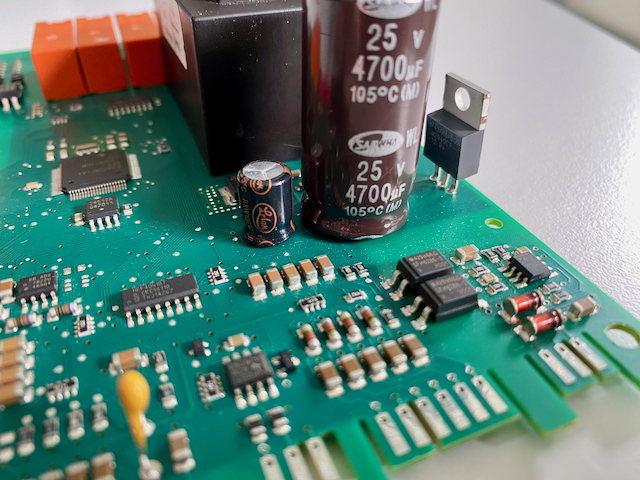
Electrolytic capacitor
The tall cylindrical component is a buffer capacitor (capacitance ) for the control voltage on the circuit board. It smooths the converted/rectified supply voltage and stores energy for load peaks, so that the microcontroller does not reset when a relay or valve switches.
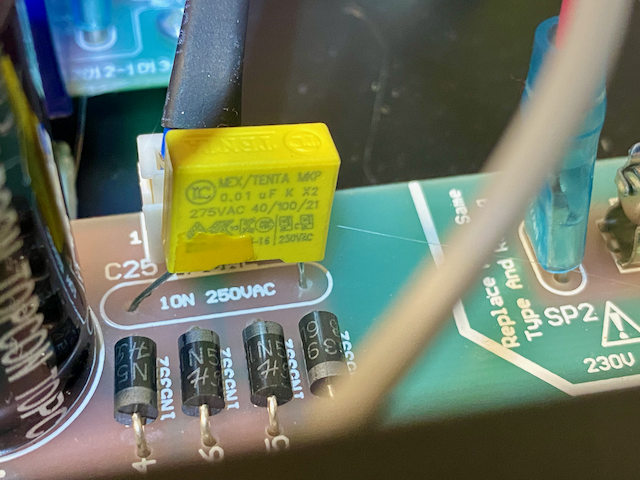
Film capacitor
The yellow component is a safety interference suppression capacitor (MKP film) for mains operation. Capacitance: 0.01 µF (10 nF), 275 VAC. Type: MKP (metallized polypropylene film). Use here: between L and N for EMC interference suppression (RFI filter) of the power supply of a guitar amplifier.
2 What can it do?
A capacitor stores electrical energy in the electric field between its plates. It can store voltage for a short time and release it again. Typical applications are:
- energy storage device (buffer, decoupling capacitor),
- smoothing of direct voltages in power supplies (see figure),
- interference suppression in EMC filters,
- frequency-dependent electric circuits (filters, resonant circuits),
- phase shifters in three-phase motors,
- compensation of reactive power in grids.
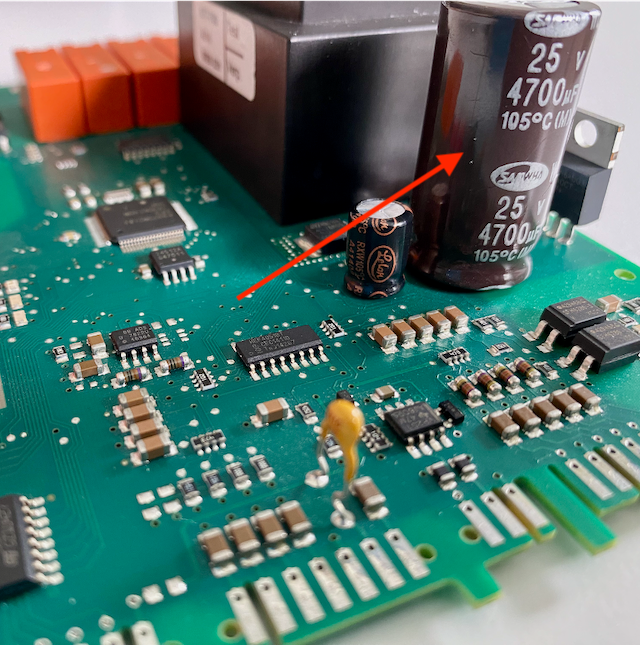
EMI filter / smoothing capacitor
This electrolytic capacitor smooths the voltage fluctuations at the output of the power supply and ensures that the electric circuit is supplied with a stable direct voltage. By means of its stored energy, it also absorbs load peaks that occur, for example, when relays pull in.
3 How does it work?
A capacitor consists of two electrically conductive areas (plates) that are separated by a dielectric (insulator). If you apply a voltage , equal but opposite electric charges and accumulate on the plates. Between the plates an electric field arises, in which the energy is stored.
The stored electric charge is proportional to the voltage:
The stored energy is:
4 What does it look like inside?
- Film capacitor: rolled-up or stacked metal foils with plastic film as the dielectric.
- Ceramic capacitor: thin ceramic discs as the dielectric with vapour-deposited electrodes.
- Electrolytic capacitor: metal foil with an applied oxide layer as the dielectric, conductive electrolyte as the counter electrode.
- Supercapacitor (Super Cap): special materials with an extremely large surface area (double-layer capacitor).
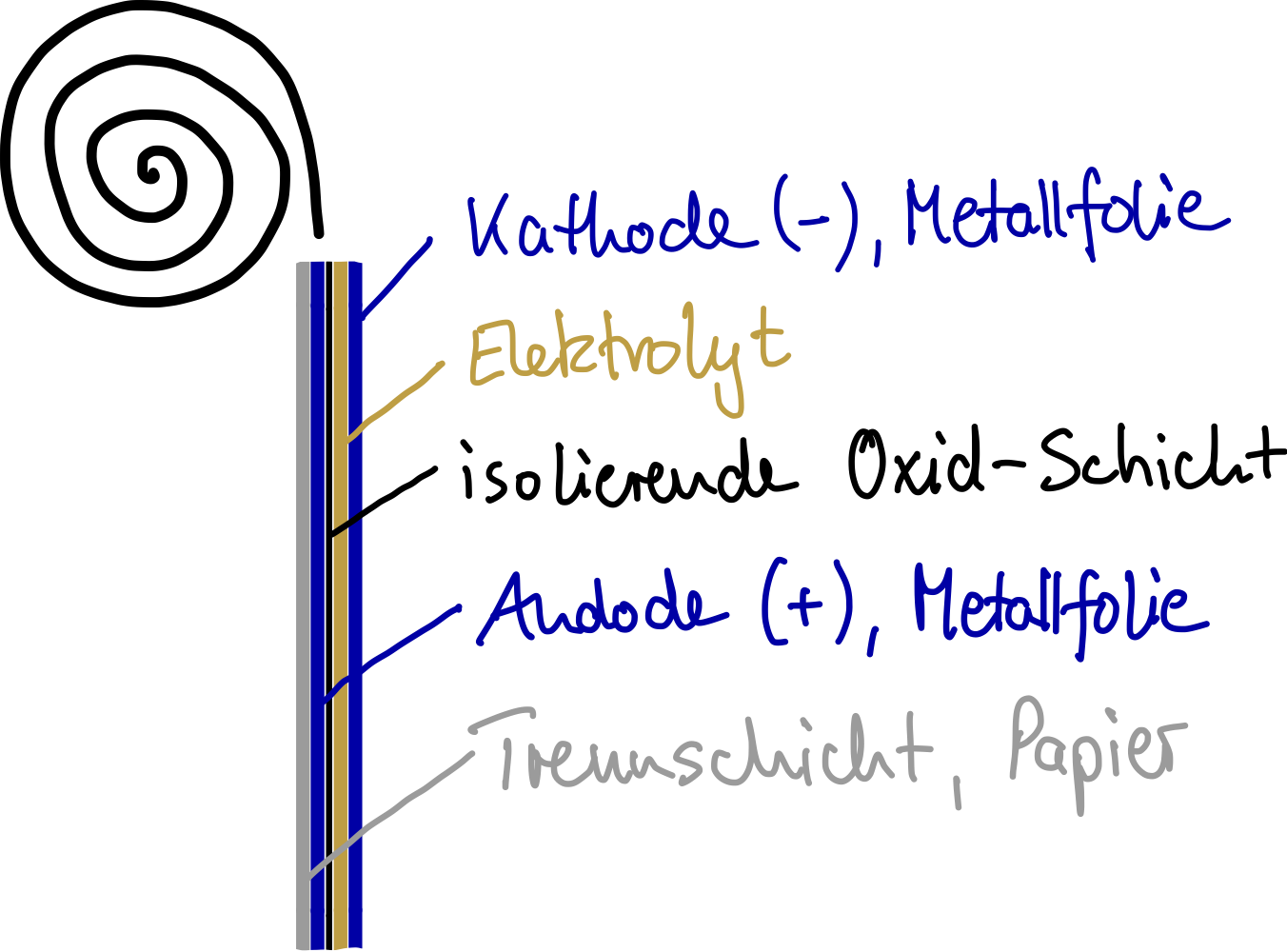
Dielectric
A dielectric is an electrically non-conducting substance (or vacuum) that can store an electric charge in an electric field without allowing a current flow. Dielectric materials such as air, glass or ceramic are used as insulators, for example in capacitors or cables, to separate conductive parts and to build up electric fields. Their ability to store electric charges is described by the permittivity.
5 What role does it play in teaching?
Capacitors illustrate the concept of electric field storage and the dependence between geometry, material properties and electrical quantities. In alternating current theory they are central examples of reactance and phase difference. They are also an element of filters, resonant circuits and energy storage devices.
6 What role does it play in practice?
Capacitors are universal components:
- in power supplies for smoothing and energy storage,
- in EMC engineering for the suppression of interference,
- in power electronics as a buffer for high currents,
- in communications engineering as frequency filters,
- in power engineering as compensating capacitors for reactive power compensation.
Application in filter circuits
The impedance of a capacitor decreases with the frequency: . This makes it possible to realize frequency-selective electric circuits. Capacitors in parallel with the output of a filter circuit attenuate high-frequency signals and absorb current peaks, while in parallel with the output they attenuate high-frequency signals.
Symbols
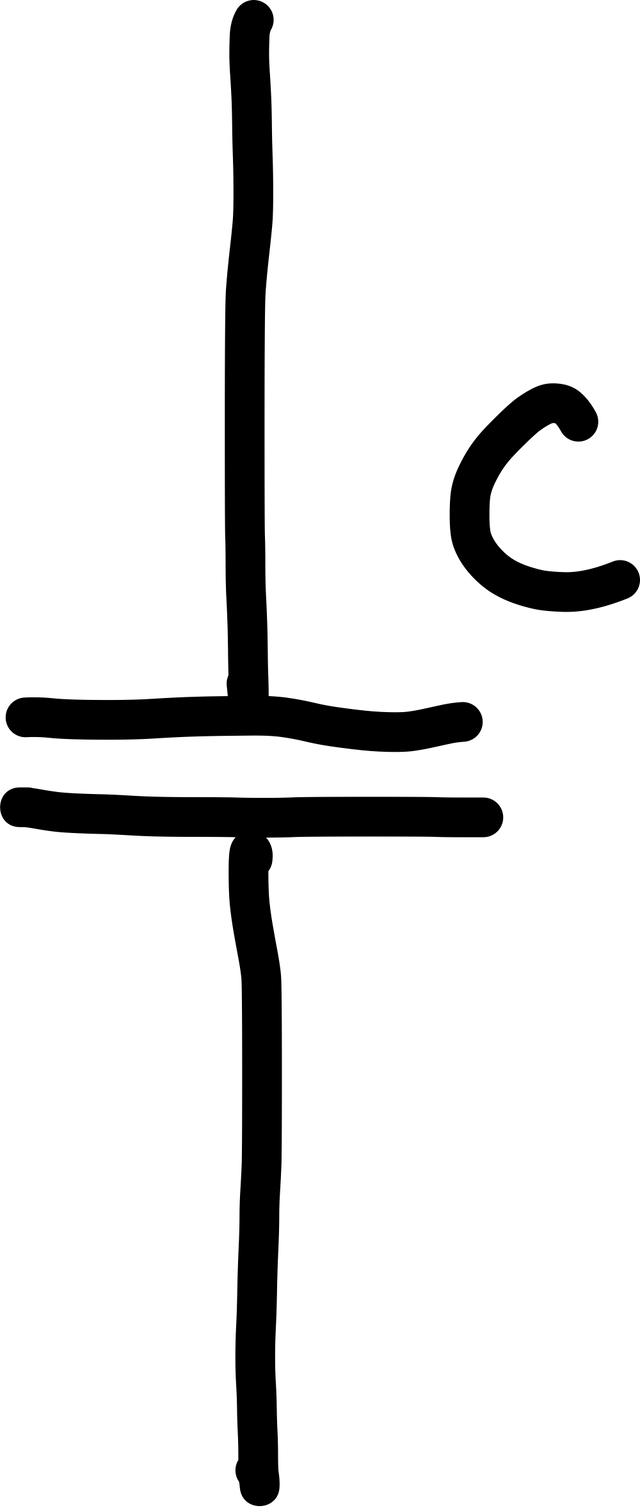
- Letter code in schematics: C
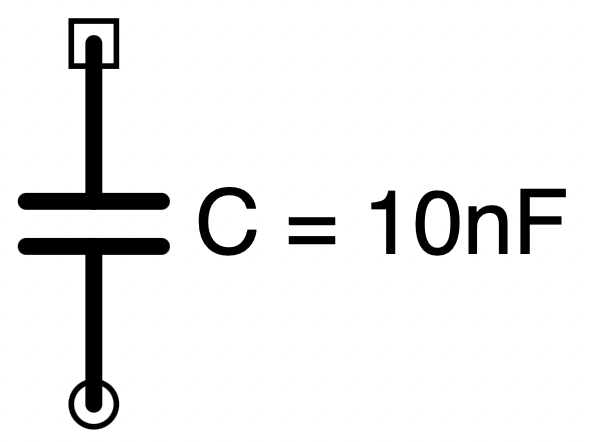
The marking at the terminals (small circle and square) is not standardized. Here it belongs to the representation in iCircuit.